Home Blog Page 4

Information on religious organizations

0
Unit 2020 2021 2022 2023 2024 2025
Central main mosque units 1 1 1 1 1 1
Main mosque units 16 16 16 16 16 16
Five-time prayer mosques


units 98 98 98 98 98 98
 

Cemetery


units 82 82 82 82 82 82
 

Shrine


units 17 17 17 17 18 18
Non-Islamic religious association units 1 1 1 1 1  

1

Number of wedding halls units 32 32 32 21 20 22


List of the leadership of Bobojon Ghafurov District

0
Full name Position Contact phone (code 8-3442)
Numonzoda Temurjon District Head 3-22-44
Hakimzoda Abduahad First Deputy Head 92-707-42-03
Yusufi Akbar Muhiddinzoda Deputy Head 92-608-23-47
Abdullozoda Firdavs Toji Deputy Head 92-777-84-48
Tursunzoda Dilorom Deputy Head 92-842-25-56
Homidzoda Faridun Furqat Deputy Head 93-572-11-11
Usmoni Abdujalil Usmonzoda Head of Office 92-757-01-19

Bobojon Ghafurov District

0

Khujand District was established in 1926 by a Decree of the USSR Central Executive Committee. From 9 January 1936 it bore the name Leninabad. By Decree of the Supreme Soviet of the Tajik SSR of 27 October 1939, it was included in the regional structure. On 30 January 1999, on the 90th anniversary of the birth of the Hero of Tajikistan, the district was named after Bobojon Ghafurov.

Total district area: 2,651.7 km²

Population as of 01.01.2026: 413,743 people

District centre: Ghafurov Town

Ghafurov Town population: 22,371 people

Rural population: 391,372 people

Number of villages by town and rural jamoats

  1. Khistevarz rural jamoat — 3 villages
  2. Isfisor rural jamoat — 7 villages
  3. Ovchi-Qalacha rural jamoat — 8 villages
  4. Unji rural jamoat — 7 villages
  5. H. Usmonov rural jamoat — 7 villages
  6. Yova rural jamoat — 5 villages
  7. Ismoil rural jamoat — 4 villages
  8. D. Kholmatov rural jamoat — 6 villages
  9. Zarzamin rural jamoat — 4 villages
  10. Chashmasor rural jamoat — 5 villages
  11. Ghozien rural jamoat — 10 villages
  12. Ghafurov town jamoat — administrative centre

Ghozien Rural Jamoat

0

Ghozien rural jamoat is part of Bobojon Ghafurov District in Sughd Region and is located in the central-western part of the district, on the outskirts of the city of Khujand, along the Khoja-Bokirgan river. Total area is 503.83 ha. Population is 19,340 people.

Administrative structure of the jamoat

The administrative composition of Ghozien rural jamoat includes the villages of Qahramon, Ghozien-1, Ghozien-2, Gumbaz, Sedasta, Dehai Bolo, Dehai Poyon, Chorsu-1, Chorsu-2 and Qotma. The jamoat has 2,783 households and 8 mahalla (neighbourhood) committees operate there.

Historical and cultural background

It is known that every settlement has its own history and chronicle. The village of Ghozien also has an ancient history. As historians note, Ghozien is one of the oldest villages around the city of Khujand. From the time of the spread of Islam around Khujand, it received its name as a stronghold of the “ghazi” (warriors for the faith).

Over the centuries, Ghozien preserved its agricultural way of life, based on farming, gardening and livestock raising. Proximity to Khujand and trade routes ensured the village’s economic development.

Modern state

Today, Ghozien rural jamoat is one of the largest rural settlements in the district. The basis of the economy is agriculture: growing cotton, grains, vegetables and fruits. Schools, medical facilities and cultural centres operate in the jamoat. Small businesses are developing in the field of agricultural product processing.

Regular session of the Council of People’s Deputies held in Bobojon Ghafurov District

0

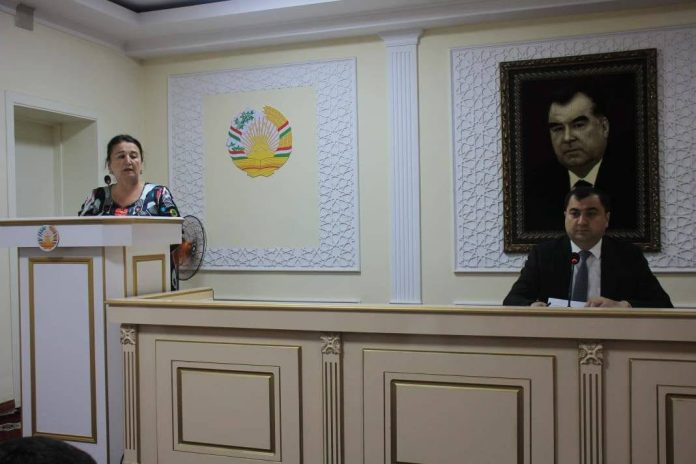
On 14 May 2026, the regular session of the Council of People's Deputies took place at the Executive Authority of Bobojon Ghafurov District. The session was attended by the District Head, deputy heads, department directors, and chairpersons of all 12 rural and town jamoats. The discussion covered the execution of district budget revenues and expenditures, development plans for education, healthcare and agriculture, and the 2026 investment projects pipeline.

Announcement: Public reception by the District Head — 20 May 2026

0

Sign-up at office No. 12 or by e-mail at mihd.bgafurov@mail.ru. The reception will be held from 14:00 to 17:00. Visitors should bring a valid ID.

New secondary school opens in Khistevarz village

0

With the participation of the District Head and representatives of higher authorities, a new secondary school building has been put into operation in Khistevarz. The school features 32 classrooms, a library with a digital hall, dedicated rooms for IT, chemistry, physics and biology, and a sports hall. Construction was financed by the state budget and contributions from private investors.

New fruit processing plant launched in Shahrak-i Ghafurov jamoat

0

A new fruit processing facility has been put into operation in Shahrak-i Ghafurov jamoat through joint investment from domestic and foreign partners. The plant is equipped with modern European machinery; its products — natural juices, jams and dried fruits — are intended for both domestic consumption and export.

New archaeological exhibition of Sogdian artefacts opens at the Arbob Culture Museum

0

The exhibition features over 200 ancient items and runs through 30 June 2026. The display brings together archaeological discoveries from various sites of ancient Sogdiana.